like the flip side of a coin nightfall delivers glorious moonlight
It’s an addiction. The craving to go outside and catch the first golden light of dawn. Hours later, it’s the last few minutes of a long day, and I have to convince my ocean-breeze-tangled self to go inside, to leave a perfectly executed moon shining on the waves, even as the timepiece on my hand tells me I should be in bed.
A last glimpse of moonlight and the irresistible grandeur of the ocean and I head inside, reluctantly. Careful to pull the curtains open in my room, caution against sleeping in and missing the first sunlight rising again, over the horizon.
It’s an addiction…the ocean. A fabulous, senseless, overpowering addiction.
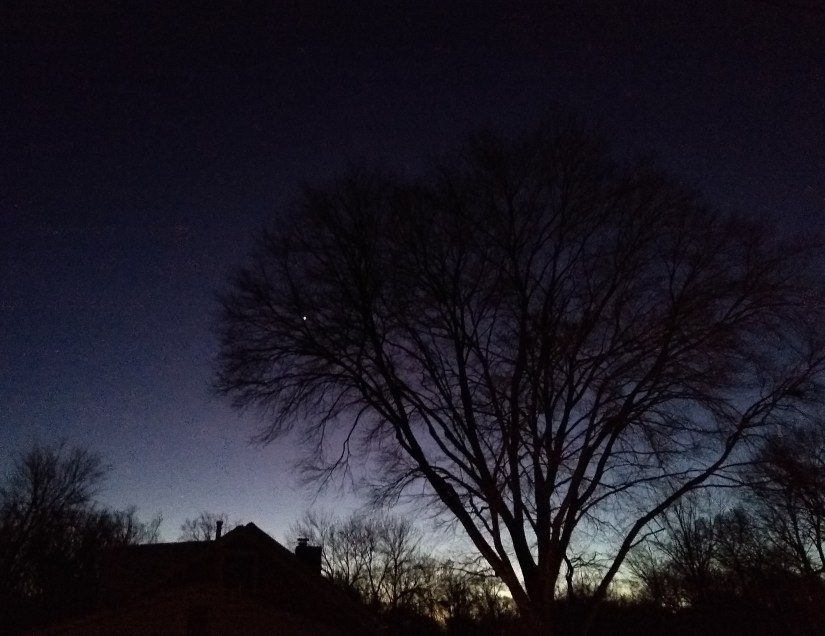
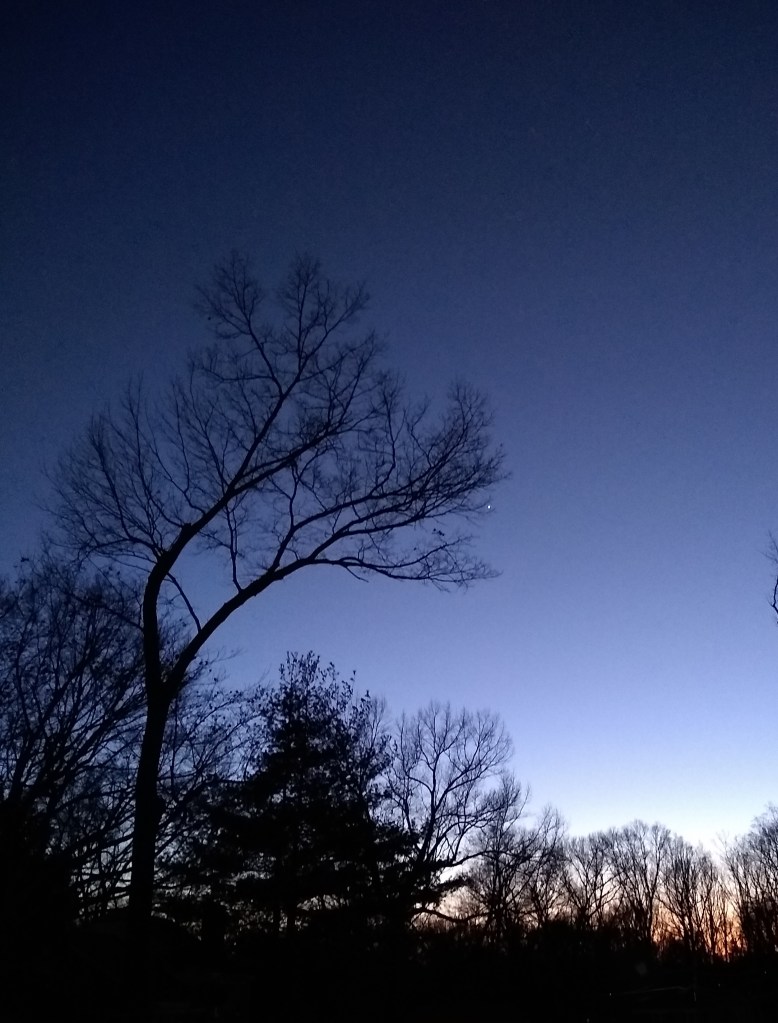
I don’t know the constellations like so many do. I know the Big Dipper, and the Little Dipper, and I used to know the North Star. Now it’s just me and that bright star I see so many nights in the west…Sirius? a planet? I don’t know…and it’s not just for me, it’s for everybody, I suppose…that bright star (or planet). It’s been guiding folks for centuries. Surely, you know that star.
I remember lying in bed at the beach after Christmas. It was night, and so it was dark, the room was dark but for the glare of the tv, and outside it was dark. Beach dark. The way it gets dark at the beach. There was enough light from the pier to see white caps as they moved on shore, what a treat, and the sky (eastern) seemed clear but with just one distinct light, probably a planet, I assumed, just to the left of the patio door frame. I didn’t think it was the North Star, but my eyes were drawn to that one bright light on the vast dark sky, and I held onto it as if it were my North Star. How many times I looked out before I fell asleep. And every time I woke during the night, I looked out at the waves and then up to the star. I looked to see if it had moved. Was it closer to the door frame? Did it get to the right of the door frame? It was the dearest, most precious thing to me at the moment. I didn’t understand, but I knew, without figuring it out, how precious it was to me. It was as if that star was there for me.
I had things that were worrying me that night, and the light, whether it was a star or planet, was wonderful and stayed with me as I navigated an anxious state of mind. Whatever troubles were haunting me through the night and the previous and the following day, whatever troubles were part of my life, I had that star. I wish I could see it every night from my bed. I wish I could open my eyes in the middle of the night, like I did that night, and take in the wonder of that little bright light and it would give me peace enough to return to sleep.
I need to get to bed. It’s late and way too cold to go outside and look for stars. I can pull the curtains aside and see the skies outside the window are cloudy gray, too gray behind the treetops to see any stars. Even my bright star in the west. When I wake in the morning, it will be past the time for stars. The clouds scatter and the morning sun shines bright these days on criss-cross footprints and left-over snow, and sweet little birds hop about and peck at wintry white icy crystals.
___________________________
Like flickering starlight, beautiful words from songwriters call and inspire:
“In the darkness of my night, In the brightness of my day.” [Bob Dylan, Girl from the North country] Out of Dylan’s prolific wording and wonderful imagery, these simple words have called to me for years, and it was inevitable one day I’d write about the darkness of night and the brightness of day.
Kris Kristofferson repeating Bob Dylan’s description of Johnny Cash: “Johnny was and is the North Star, you could guide your ship by him.”
Catch a falling star and put it in your pocket. Never let it fade away. Catch a falling star and put it in your pocket. Save it for a rainy day. — Perry Como (1957), written by Paul Vance/Lee Pockriss.
[My thoughts from a December evening, a few months ago, during the Geminid Meteor Shower.]
I debated whether I wanted to go outside in the cold again, but I felt moved. Unlike last night, I’d wear a scarf this time, and zip my jacket, and I’d sit, make myself comfortable, in my summer deck chair.
Just what I did.
Clearly, it was starry. The sky was beautiful and the night around me felt wonderful. I was glad I was there.
Less than a minute, and I saw the moving flash to my right…behind the tree branches in my next door neighbor’s yard. Enough to make me gasp. It wasn’t the kind of meteor where you’re not sure you saw it. This was bright and clear, and it arced, fading along the way, to the right. Shooting stars are what they are. A second’s worth of something magical about the universe. Not the kind of magic we see with our imaginations. But the real deal.
I sat and looked to see if there would be more. And the dark sky, with shimmering stars loosely scattered among the tall branches, was more exquisite, I believe, than the meteor itself. The very reason we go outside late, on a cold December night. A pocketful of starlight. I was glad I was there.
I remember standing under the stars. Under all the stars that peak in and fade out of a dark endless sky canopy.
I stood at the end of a walkway, far enough to leave the incandescence of civilization behind. It was the end of a day. The end of a night. The end of a week. And it was past the glow of manmade lights. Out on the edge of darkness. The language of awareness came in singular musical notes…about the edge of darkness.
We have to move past the glare of people and civilization, it seems, and stand at the edge of darkness to really see the stars and the heavens. And then it’s a gift to us. Out on the edge of darkness.
“Out on the edge of darkness”, from Cat Stevens’ Peace Train (1971).




 etikser